
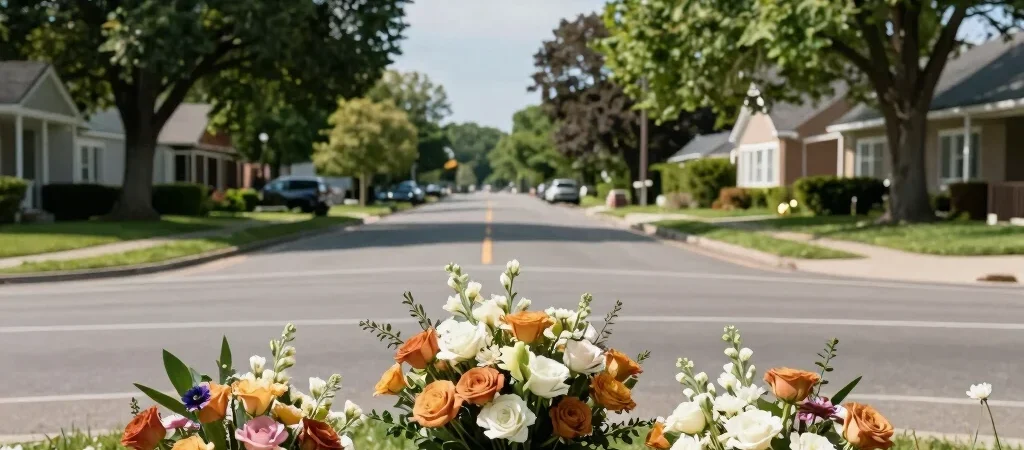
A cluster of flowers at an intersection changes what the place means. For someone who knew the person killed there, it may hold a name, a routine, and a life that cannot be reduced to a location on a map. For everyone else, it is a reminder that a traffic story happened to a family and a community.
Notice What Is Actually There
A memorial’s details can be worth documenting: a date on a ribbon, a note tucked beneath a jar, or how the marker sits in relation to a crosswalk or roadside path. Record only what can be seen, and distinguish that from what you have been told. A photograph should provide context, not turn someone’s mourning into a spectacle.
Keep the Person in View
If a name or message is shared publicly, consider whether the family has chosen to share it and whether repeating it adds meaning. Avoid guessing about what happened based on the memorial or the road nearby. The circumstances may be unclear, but the person’s humanity is not.
Document With Care
If you are considering leaving something, prioritize your safety and check local guidance before approaching a roadside. Never step into traffic or place an object where it could create a hazard. Sometimes the most respectful act is to pause, take in the reminder, and let the family’s chosen words remain theirs.